When the opening ceremonies for the 2026 Winter Olympic Games kick off in Milan this Friday, the competitors will be rekindling a tradition that stretches back over two millennia.
The Olympic Games, of course, started in Greece in approximately 800 B.C. and ran every four years for nearly 1,000 years before they were revived in 1896.
Allison Smith, visiting assistant professor of classics, will be listening for the distant echoes of the original games. She shared how the modern games compare to the games in ancient Greece.
If someone from Ancient Greece wound up in Milan, would any of it look familiar?
First, I think they would be shocked that it's in Italy. The Olympics originated at Olympia, where the temple to Zeus sits.
Today, the Olympics are a moving circus for which cities compete for the honor of hosting. In antiquity, the site of Olympia was sacred. To move the Olympics away from Olympia would be seen as blasphemous.
Are there parallels in the actual sports?
There are none in the winter games. It probably goes without saying that winter sports didn’t exist in the ancient games. I think someone from Ancient Greece would be absolutely fascinated by curling.
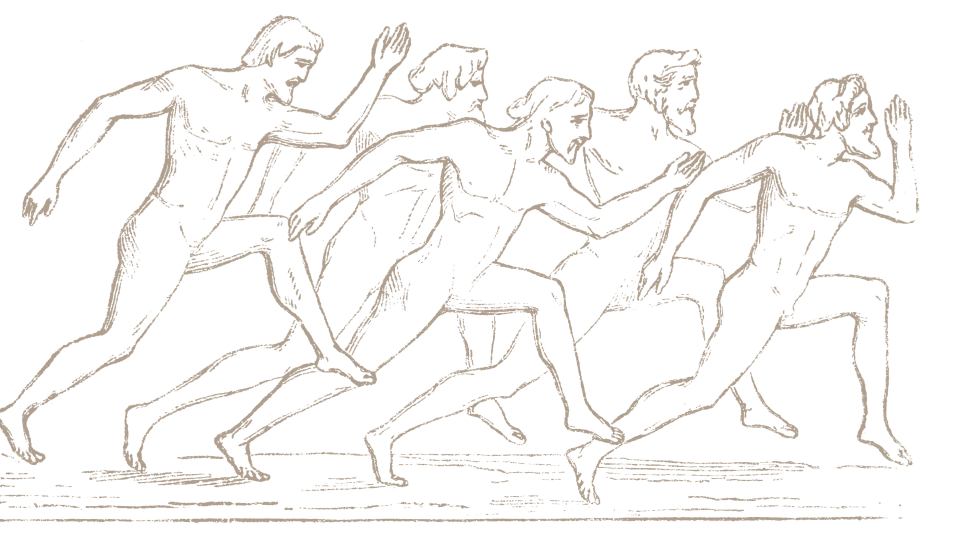
However, in the summer games, the track and field events still look a lot like some of the original games. Distance running events, discus, javelin and the long jump all were Olympic events in ancient times.
The first Olympics was a single event – the Stadion, which was, basically, a 100-meter dash. (That event was, legendarily, won by a cook, not a professional athlete.) The ancient games grew to include horse racing events like chariot races and combat sports like boxing and wrestling. So, there are pretty strong parallels between the ancient games and the modern summer games.
How would the audiences and competitors differ?
They would be shocked at the presence of adult, married women in the grandstands and, even more so, by women competing in the games.
Of course, that would be shocking to somebody who saw the 1896 Olympics. But we think most women may not have even been allowed to watch.
The men who competed were practically nude, so they would not have exposed women to that.

Did winners receive medals in Ancient Greece?
No, medals are a modern invention. And the second- and third-place competitors did not receive a prize either.
The Olympics are what are referred to as Stephanitic games. “Stéphanos” means crown in Greek and so the winner would receive a crown of olive leaves that were cut from the sacred olive tree that stood next to Zeus's temple at Olympia.
What might look familiar to contemporary competitors and fans is that Olympic winners would not receive any prizes other than the crown, but they would capitalize on their fame, frequently receiving extra prizes—money, honor or even free meals for the rest of their lives—when they returned to their hometown.
Were the Olympics international in nature in Ancient Greece?
No, not like they are today; but there are strong parallels.
Competitors from the Olympics spoke Greek but many traveled a long way to Olympia. Greek colonies stretched across the Mediterranean – as far as Spain and North Africa – so athletes could come a long way. And – like today – the Olympics usually brought a negotiated truce for a period of time around the games. The athletes needed safety to make their journeys and that peace helped to create the spirit of fellowship and fair competition that forms the heart of the Olympic contests. (Of course, those truces didn’t always hold just like modern Olympic Games have been disrupted by violence or political concerns.)
The Ancient Olympics were religious in nature as well, right?
Yes, the secular nature of today’s games would come as quite a surprise to the ancient Olympians.
Olympia itself is a sacred site; it was the sanctuary dedicated to Zeus. There is evidence of religious activity at the site long before Olympia was the home of the Olympic Games.
The games were held in honor of the gods. On the first day of competition, every athlete took an oath to Zeus; they pledged themselves to compete for the gods.