President's Notes Community of Trust Honor Code Is More Than a Tradition
June 3, 2026
Three years after I graduated from Davidson, I found myself in a predicament at a clothing outlet in Burlington, North Carolina. I was a graduate student making a rare, expensive purchase—over $100—and my credit card was declined.
Whether it was a computer glitch or a limit I’d exceeded, I was standing at the register with no other way to pay.
From further back in the line, I heard a voice call out: “Doug? Do you need something? Can I help?”
It was William, a Davidson classmate I hadn’t seen for three years. When I tried to politely decline his help, he insisted: “Doug, let me cover this purchase with my card, and you can send me a check. You, know, on your honor.”
We both smiled, laughed, and we knew: the Davidson Honor Code. William was a powerful exemplar of that spirit—applied out of its purview and long after graduation.
As president, I frequently meet alums who share their own versions of this story. They describe how the Honor Code shaped their worldview and how they make decisions.
An elected official shared how she reached out to a colleague on the other side of the aisle—a fellow Davidson graduate—for an honest explanation about a controversial situation. That staffer responded under the trust held by Davidsonians across generations.
A former business executive, and Davidson alumna, recounted being appointed to resolve a significant corporate scandal. She found the strength to make difficult decisions because she knew the only way to restore her company’s reputation was through transparency and integrity. She led a major turnaround for her firm.
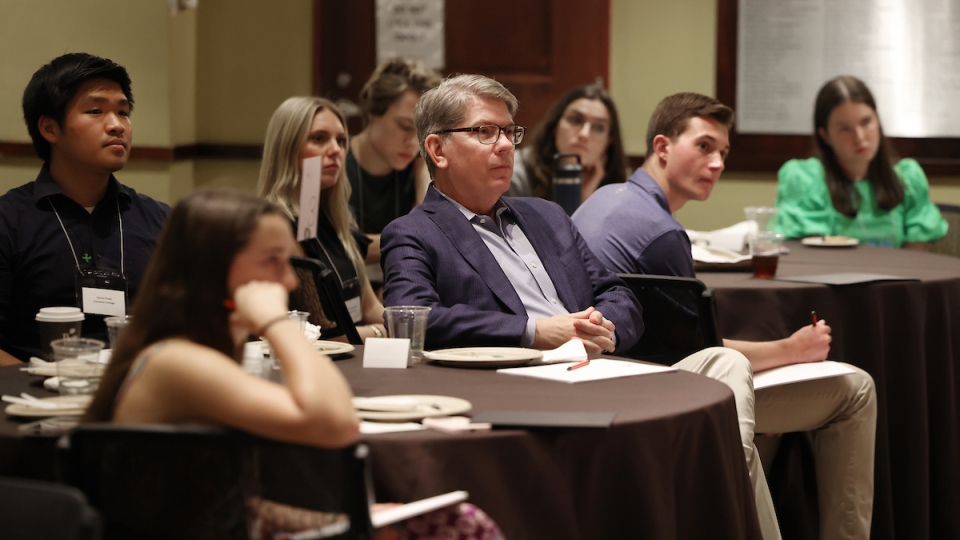
This century-old tradition of an Honor Code overseen by students under the mentorship and guidance of faculty and staff is a cornerstone of the D.G. and Harriet Wall Martin Institute for Public Good. One of the institute’s five programs, the Purcell Program on Ethics, Honor, and Leadership, has begun hosting annual national convenings for student leaders and their advisors from dozens of colleges to equip them to administer their codes of honor thoughtfully and courageously.

We must be honest about the challenges of this moment. Between the market segmentation of ideas and the distortions of truth in public life, it is challenging to maintain a culture of trust.
Our own students report less confidence in the Honor Code’s contribution to a culture of academic integrity than they did prior to the pandemic and the rise of AI.
We ask a lot of student honor council members to evaluate the ever-changing tools of artificial intelligence—and to have the fortitude to render judgments on their classmates. This is precisely why we need a shared, campus-wide effort to build a community of trust. By enabling honor council members to learn from their peers at liberal arts colleges across the country, we are building a nation-wide community of practice centered on academic integrity and trust. This work extends to the 30,000+ alums, parents of students and graduates, and friends who support our campus.
The world needs Davidson’s core values—embedded in the Honor Code and in our commitment to prepare humane leaders with creative and disciplined minds.
William’s kindness in that checkout line is just one of myriad examples of Davidson’s values put into practice. I’d love to hear your story, too. How has the Honor Code, along with its attendant values, shaped you? Send your story to engage@davidson.edu.
This article was originally published in the Spring/Summer 2026 print issue of the Davidson Journal Magazine; for more, please see the Davidson Journal section of our website.