An Ache to be Back: Keith Kleeman ’97 Returns to Davidson as Alumni Innovator-in-Residence
September 3, 2026
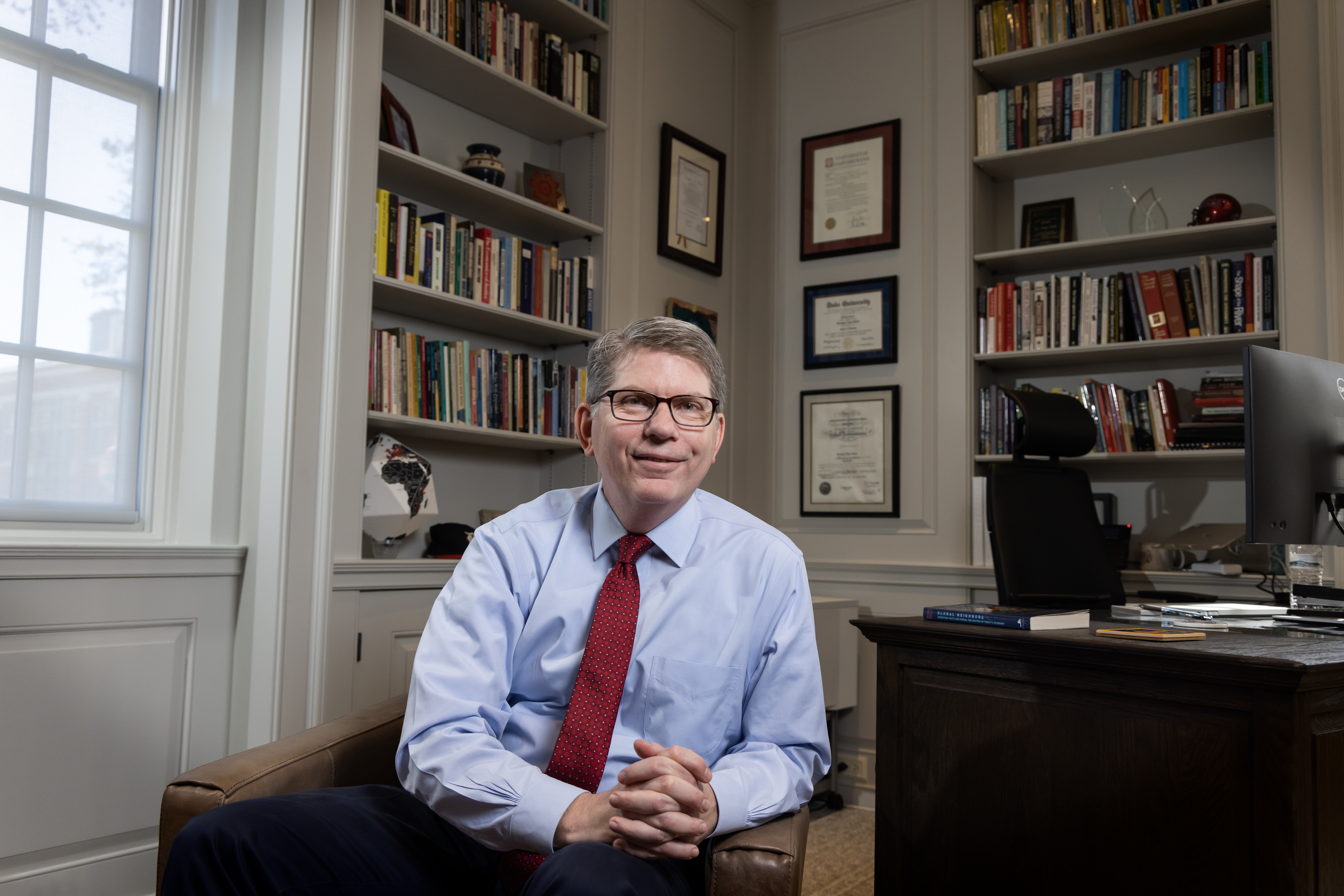
For Keith Kleeman ’97, joining Davidson College as the new Alumni Innovator-in-Residence at the Jay Hurt Hub for Innovation & Entrepreneurship isn’t just a new role — it’s the ultimate homecoming.
During his 1997 commencement address, President Emeritus John Kuykendall ’59 explained to Kleeman and his classmates that nostalgia is an “ache to be back in a place.” Kleeman had never considered the deeper meaning of the word, and hearing it defined that way struck something in him that has endured for nearly three decades.
Through the Peace Corps, graduate school, building companies and a career that took him far from Davidson, the words stayed with him.
“I remember hearing Dr. Kuykendall explain what nostalgia really meant, and it just hit me that afternoon,” Kleeman said. “An ache to be back in a place. To return to this place. I had never thought about the word that way. I still have the original program that contains a copy of his speech, and it sits on my desk today. I don’t think I could have known at 21 how much those words would eventually mean to me.”
Decades after hearing those words and earning his diploma, the serial biotechnology entrepreneur is making his long-awaited return, bringing a wealth of experience back to the community that shaped him.
The Unconventional Path
Recruited for the men’s soccer team, Kleeman arrived at Davidson with support from athletic scholarships, grants and the Bonner Scholars Program.
His path through college quickly proved less conventional.
“I never fit neatly into one academic box,” Kleeman said. “I loved science, but I also loved literature and writing. At the time, those interests seemed unrelated. It turned out that learning to live in both worlds was one of the most valuable things Davidson gave me.”
Kleeman began as a biology major but found himself increasingly drawn to reading, writing and the outdoors. Without the time to change majors and still graduate on schedule, he completed his biology degree while writing a novel on the side. Professor Emeritus Bill Mahoney took on the novel as a senior project, while former Bonner Scholars Program Director Ruth Pittard and the late Head Men’s Soccer Coach Charlie Slagle provided the mentorship — and occasional tough love — that helped him rebound from a difficult first semester.
By graduation, what had once seemed like disconnected interests had become an education that crossed traditional boundaries between the sciences and humanities.

The Hurt Hub is Davidson College's home for innovation and entrepreneurship, open to students, alumni, faculty, staff, entrepreneurs and the Greater Charlotte community.
“It’s the constellation of components that makes Davidson so special — the faculty, the students, the academic rigor and the overall culture of acceptance and welcome,” Kleeman said. “If it were just one of those things, it would be easy to reproduce. Academic rigor by itself isn’t unique; there are plenty of places that have that. There are very few places that bring all of those things together the way Davidson does.”
At 21, diploma in hand, Kleeman was ready to see where that education might take him. After a disappointing near-miss for a Watson Fellowship, he joined the Peace Corps and spent two years working in coastal resource management in the Philippines. The experience fundamentally changed how he thought about opportunity, service and success.
“In America, a lot of times, the first thing people want to know about you is what you do for a living. In the Philippines, people don’t define themselves that way,” Kleeman said. “Living there made me think first about the opportunities I have and how those opportunities allow me to make someone else’s life better. I learned that if doing good isn’t your primary focus, you’ve missed the point. If you do good first, success follows, and it’s that kind of success you can feel great about.”
From there would come graduate school, medical writing, entrepreneurship, artificial intelligence and biotechnology. Kleeman would build companies, help bring new medicines through the regulatory process and spend much of his career solving problems at the intersection of science, technology and human health.
Along the way, the unconventional combination he had begun assembling at Davidson — science and literature, analytical thinking and storytelling, ambition and service — became not a collection of unrelated interests, but one of the defining strengths of his career.
And through it all, he remained nostalgic for Davidson.

From Medical Writing to AI and Biotech
Kleeman eventually combined a Davidson biology degree, his Peace Corps experience and a master’s degree in English literature from Xavier University in a way that would have been difficult to predict when he was an undergraduate: medical writing at Eli Lilly and Company.
That work led him to launch his first venture, Medical Communication Consultants (MCC), and began more than two decades of building companies at the intersection of science, writing and technology.
He founded MCC and scaled it to 400 writers, supporting the regulatory approval of more than 25 therapeutics. He later created ClinGenuity, which developed one of the pharmaceutical industry’s earliest artificial intelligence platforms using natural language recognition and processing to automate the creation of regulatory documents.
Following the combination of MCC and ClinGenuity and their acquisition by Certara, Kleeman served as vice president of strategy and clinical innovation. Today, he is founder and CEO of Celvant and Optimvia, companies advancing synthetic heparin and platforms designed to modernize drug manufacturing.
The career that followed Davidson, in other words, ended up looking remarkably like the education he received there: science mixed with writing, technology with creativity, ambition with service.
Nearly 30 years after graduation, Kleeman is returning to the place where those pieces first came together as the Alumni Innovator-in-Residence for the Hurt Hub to help a new generation of Wildcats discover where their own unexpected combinations might take them.
Redefining Innovation at the Hurt Hub
As the Alumni Innovator-in-Residence, Kleeman wants to demystify entrepreneurship for current Davidson students and help them see innovation as something much broader — and more accessible — than founding a company.
Innovation has nothing to do with starting a business. Being an innovator isn’t some mysterious quality you’re born with. It’s a way of approaching the world. Innovators see problems and obstacles as opportunities — their instinct is not to be discouraged by what isn’t working, but to ask, ‘How do I fix this?’ That’s the mindset shift. You don’t have to build a company or invent the next big thing to be an innovator. You need the curiosity to see what could be better, the confidence to try something different and the tools to turn an idea into action. Will that always result in a successful business? No. That’s not the point. Innovation is about how you approach problems in the first place.
He also wants students to understand something his own career has repeatedly reinforced: the people they choose to surround themselves with may matter as much as any individual idea.
“I’ve been very lucky in terms of selecting really good people to be around who care about what happens to me and who also happen to be incredibly smart and accomplished,” he said. “I want students to understand how choosing the right mentors and partners can pay dividends for decades.”
At the Hurt Hub, Kleeman plans to hold open office hours, mentor student startups and help students bridge the distance between an interesting idea and meaningful real-world impact. Just as importantly, he hopes students who do not think of themselves as entrepreneurs will walk through the door.
For someone whose own Davidson experience resisted easy categorization, that may be particularly fitting.
The Ache to Be Back
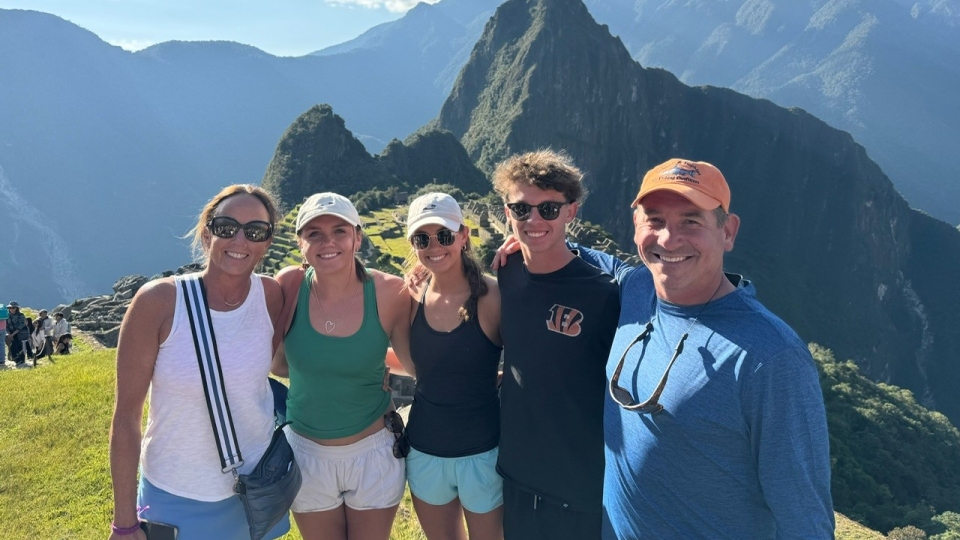
Kleeman’s return comes with another full-circle moment. His youngest daughter, Annie, is joining Davidson’s Class of 2030 as a women’s soccer scholar-athlete — arriving on the same campus where her father first came as a recruited soccer player nearly three decades earlier.
And so a word from Commencement in 1997 has acquired a meaning Kleeman could not have understood when he first heard it.
Nostalgia: an ache to be back in a place.
After Davidson came the Peace Corps, graduate school, companies, medicines, artificial intelligence, biotechnology and a career built around turning ideas into things that might make a difference.
But the place kept pulling.
Now, nearly three decades later, Kleeman is back — not to recreate his Davidson experience, but to help students create their own.