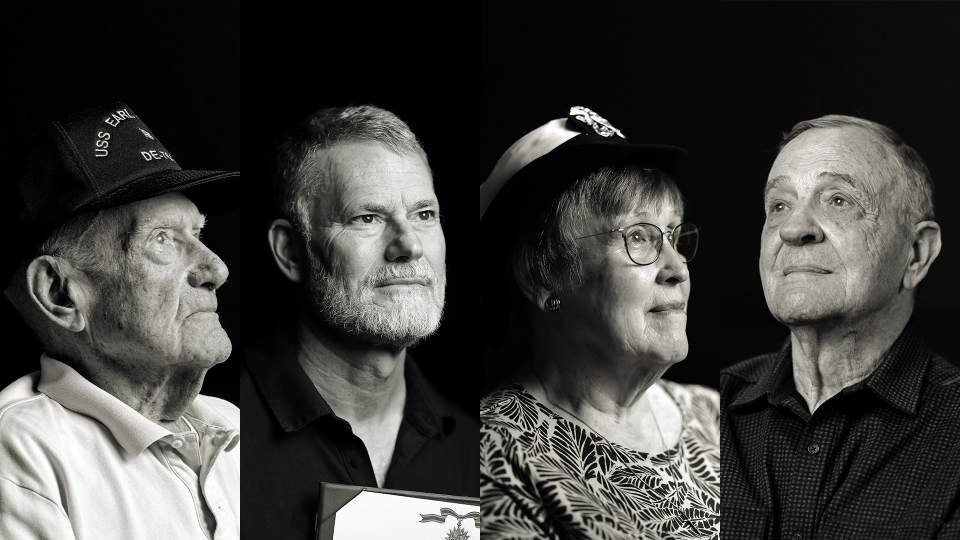
Judith Almon Heinemann was a Lieutenant Junior Grade nurse in the Navy.
In Their Own Words: Veterans History Project Captures Stories of Military Service and American Life
November 11, 2025
- Author
- Lisa Patterson
Army Air Corps First Lieutenant Sam Maloney ’48 lined up rows of folding chairs for a makeshift church service he would lead on the deck of a ship transporting troops to Okinawa in the last months of World War II … a three-week respite from his high stakes, adrenaline-fueled missions flying and jettisoning explosive cargo over Pacific islands surrounded by vast ocean.
At the request of bored soldiers eager for distraction, he put his then-unfinished seminary training to good use as the unit made its way by sea to their next post.
Marine First Lieutenant Carlton Fulford Jr. returned from Vietnam to his small Georgia hometown and dialed the young woman he’d met at a party before he shipped out. She didn’t remember him – just his red GTO convertible. But she agreed to a date. They’ve been married for more than 50 years – their eldest child recently was named deputy commander of the U.S. European Command, following in his father’s footsteps.
U.S. Army Colonel Robert Lutz ’87, M.D., quickly inserted a chest tube in the gravely wounded soldier to release the blood and air that were preventing him from breathing. As part of a nimble special operations medical unit, Lutz pushed for life-saving protocols and essential training: antiviral medications for special forces soldiers on missions in Africa at the height of the AIDs pandemic, advanced training for all medics, and the innovation of providing freeze-dried plasma intravenously to wounded soldiers, dramatically increasing their chances of survival.
They fought in different conflicts and for different branches of the U.S. military – all raised their hands, put on a uniform, picked up a weapon and stood a post. Some rushed to defend their nation after Pearl Harbor or 9/11. Others deployed to assist an ally under siege or recovering from disaster. Still others worked to ensure that the U.S. military was ready to respond at home or around the globe.
Nearly 42 million Americans have served in the U.S. armed forces, from the American Revolution to the wars in Afghanistan and Iraq. There are roughly 16 million living veterans, and their stories are a national treasure, from unimaginable horror to exhilarating rescues to forging lifelong connections.
The Veterans History Project (VHP) at the Library of Congress is the keeper of these incredible accounts.
Established in 2000 through bipartisan congressional legislation, the VHP aims to preserve and make accessible the first-hand recollections of veterans who served from WWI to recent conflicts. Volunteers collect interviews, photos and materials written by veterans, and the Library of Congress publishes them to a public website. The more than 121,000 interviews collected so far offer a comprehensive and multifaceted history of veterans’ experiences.
The project organizers would like to expand this effort into the Davidson community and are looking for volunteers to help.
If you are interested in participating or have questions, please email lipatterson@davidson.edu.

A team of 14 volunteers, many residents of The Pines senior living community, captured the stories of men and women whose military service spanned war and peace time for the Library of Congress Veterans History Project.
Making It Happen
Margo Heyd, a resident at The Pines senior living community in Davidson, North Carolina, has captured a trove of memories right in her own town. Heyd read a newspaper article about a friend in South Carolina who was collecting interviews with great success; with more than 60 veterans living at The Pines, she thought that success could be replicated in Davidson. After gauging interest from the local veterans, she brought on board Gen. Carlton Fulford, whose service spanned nearly 50 years and 118 countries.
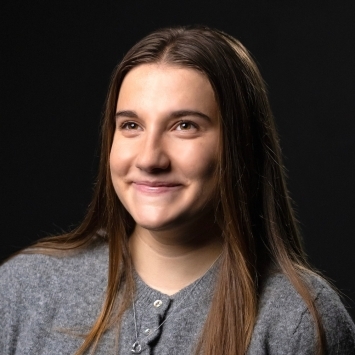
Heyd then enlisted the help of former Davidson College President John Kuykendall, a Pines resident, and William R. Kenan Jr. Professor of History John Wertheimer to find a Davidson College student to bring an intergenerational perspective and tech expertise to the project. Wertheimer approached history major Abby Murphy ’26.
Murphy brought the perspective of youth and enthusiasm for public history but, she said, people make a lot of assumptions about Gen Z’s technological skills. Wertheimer offered up the history department’s recording equipment – four duffle bags worth – and Murphy got busy familiarizing herself with how to use it through trial and error. (Note: A cell phone makes an excellent recording, but the team wanted to produce the highest quality recording possible.).
With funding from a Bank of America Kemp Scholarship to help pay some of her expenses during the summer months, Murphy worked with Heyd and a team of 14 volunteers to record interviews with 37 veterans. The conversations included two centenarians, Davidson College alums and former employees, and members of the local community.
Many of the veterans found an unfamiliar and remarkable opportunity, sharing stories they’d never uttered aloud. One veteran brought his adult daughter to the interview, where she heard his stories for the first time.
“Some stories left me in awe, and some made me laugh for hours,” Murphy told Pines residents during a presentation on the project. “Veterans told stories of loss – losing friends, family, leaders; veterans told stories of pain, both physical and emotional; veterans told stories that have stuck with them for decades, the majority of their lives – many were brought to tears.”
Murphy’s grandfathers both served in Vietnam, though, she said, they rarely talked about their service.

Prof. Emeritus Sam Maloney ’48 speaks to a journalist
Public history really shapes the American collective identity. Our goal was to be able to add to this collective memory by permanently preserving these stories. Without this project, we wouldn’t be able to paint as full a picture of U.S. military service.
In a quiet room in the Pines main building, interviewees were seated in a floral brocade covered high-back chair across from two interviewers, whose questions drifted in from off camera. While many of the questions were centered on the veterans’ military experiences, Murphy said, other questions were meant to provide context, to paint a fuller picture of the person. Each veteran’s anecdotes about family life, educational aspirations, friendships, and racial and economic realities illuminate the last 100-plus years of American life.
“This was an incredibly meaningful project for all involved, giving voice to the veterans and their stories,” Heyd said. “They made the sacrifice and we were able to pay tribute to their efforts. My father and other family members never shared their experiences but I hope others can do so in the future.”
Murphy helped coordinate other Davidson College students to stand in as interviewers, but when she found herself in the interviewer seat, she made it a point to ask her favorite question: “What would you say to someone my age who is considering military service?”
“Most of the veterans said, ‘do it,’ even if they had struggled or had bad experiences. The most common answer they gave was, ‘It taught me the importance of serving something bigger than myself.’ That stuck with me,” she said. “These veterans dedicated themselves to their country and continue to demonstrate bravery and strength to this day.”
The following are just a few excerpts from the interviews. For the full conversations and details on how to get involved with the Veterans History Project, visit loc.gov/vets.
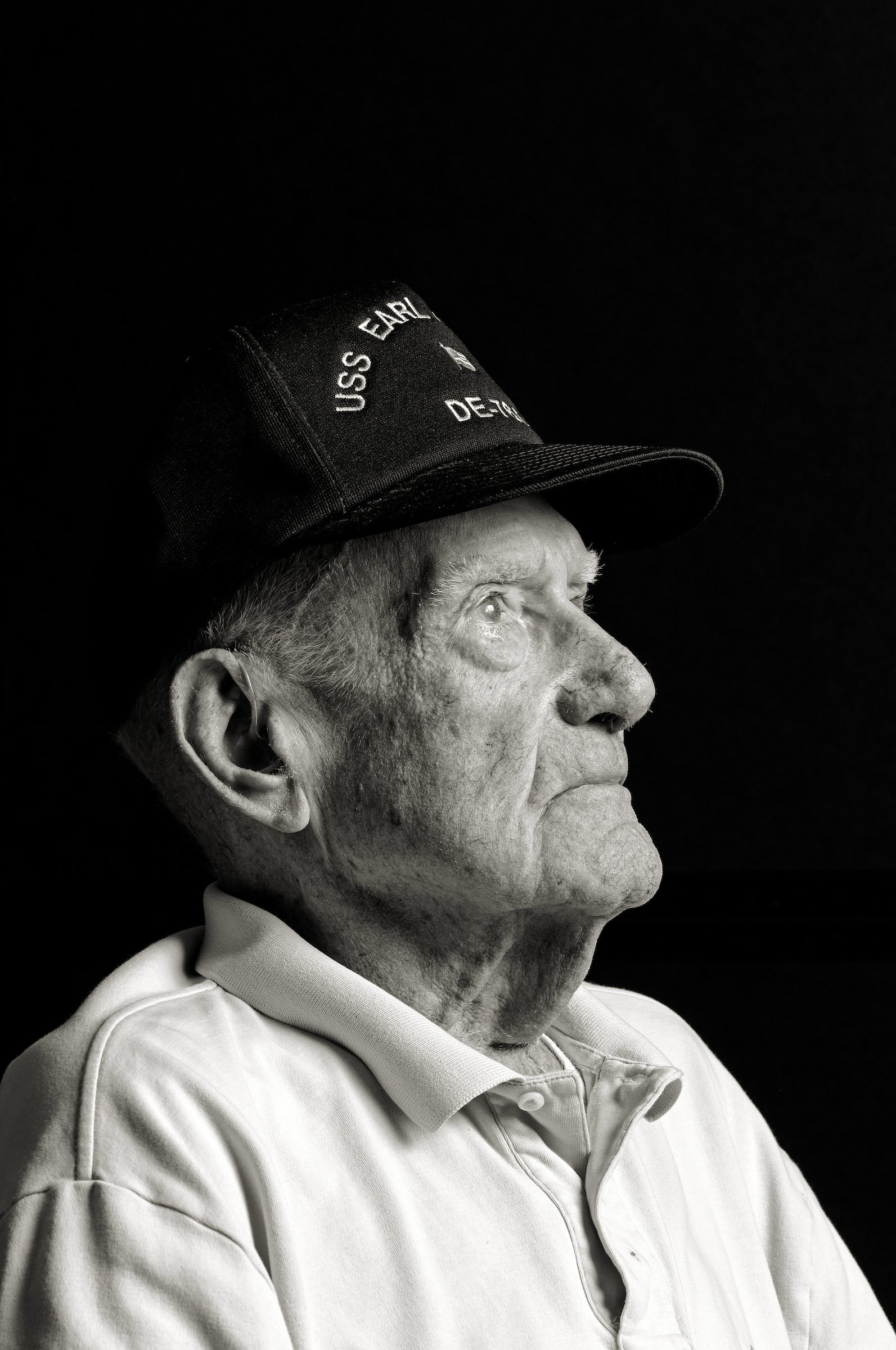
Ralph T. Jonas
WWII
U.S. Navy, Quartermaster Second Class
Ralph T. Jonas served in WWII as a U.S. Navy Quartermaster Second Class, first escorting convoys across the Atlantic before receiving orders to the Pacific.
“I was on a destroyer escorting ships back and forth to Europe. The first convoy we took was all the way from the states to Cherbourg, France. There were 200 ships in the convoy. The seven destroyer escorts formed a screen – we were the shield for the convoy. We were looking for submarines. At that time there wasn’t any activity by the Germans in the air, not out in the convoy areas anyway. Sometimes the cargo was soldiers, sometimes it was tanks, whatever was being shipped to Europe. Generally, it would take us 14 days to take the convoy. After six trips we got orders to go to the Pacific. Aircraft were the major threat in the Pacific. My brother was a port director at Pearl Harbor, and I was helmsman bringing the destroyer into the port at the time. Most of the damage from the attack had been cleared out when we got there in 1945… The end of the war was announced and everyone was dancing and hollering and shooting guns because the war was over. Then we were counting the points we had to get out. I thought I was going to be a career navy man and I changed my mind. I wanted to come back and go to UNC Chapel Hill like my family. I used the GI Bill – one of the smartest things the government ever did.”
Samuel D. Maloney ’48 served as a First Lieutenant in the U.S. Army Air Forces/Corps during WWII and later became the James Sprunt Professor Emeritus of Religion at Davidson College.
“The most important mission, I think, was over Koror, capital of the Palau Islands. We were told there were over 30,000 Imperial Japanese marines there. So, on that mission the lead ship’s bombs went off, which meant that ours ought to be going off, but the bombardier said, ‘We got a problem skipper, the bombs aren’t dropping – you’ll have to salvo them.’ Protocol is for the pilot to continue on course then use the toggle switch on the instrument panel to drop the bombs all at once. You never want to land a plane filled with bombs. So, I flew straight ahead for a while then salvoed the bombs. The next morning, I was summoned by the squadron commander. The colonel says, ‘I hear you had some trouble with the bombs. Tell me about it.’ I told him and expected to get some kind of reprimand, but he was delighted. He said, ‘You might be interested in these pictures the cameras took of your bombs. When you salvoed those bombs, they hit the Japanese marine communication center.’ We’d been after that for months – we never knew where it was. He thanked me and said, ‘Mission accomplished.’”
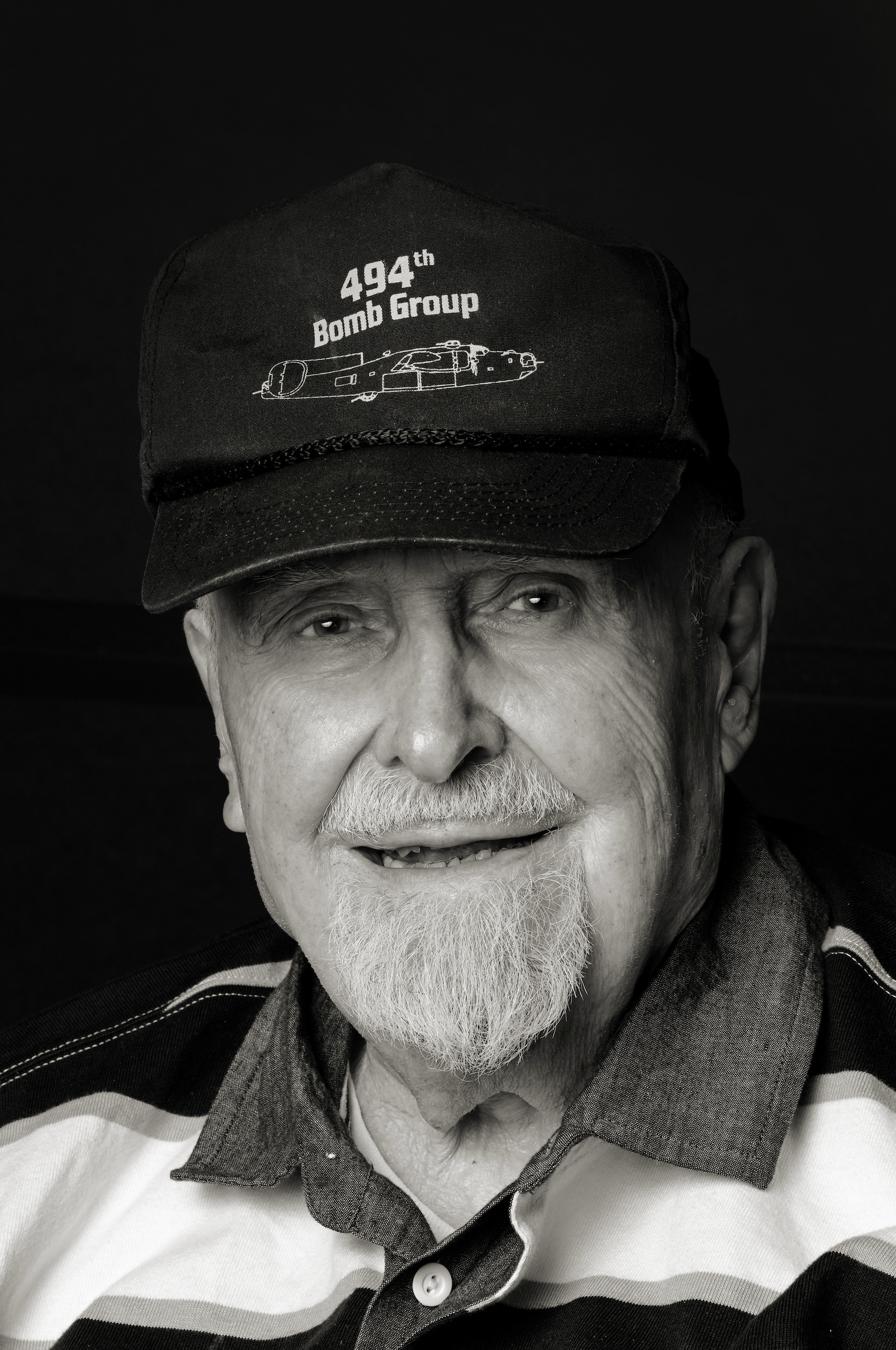
Samuel D. Maloney ’48
James Sprunt Professor Emeritus of Religion, Davidson College
WWII
Army Air Forces/Corps, First Lieutenant
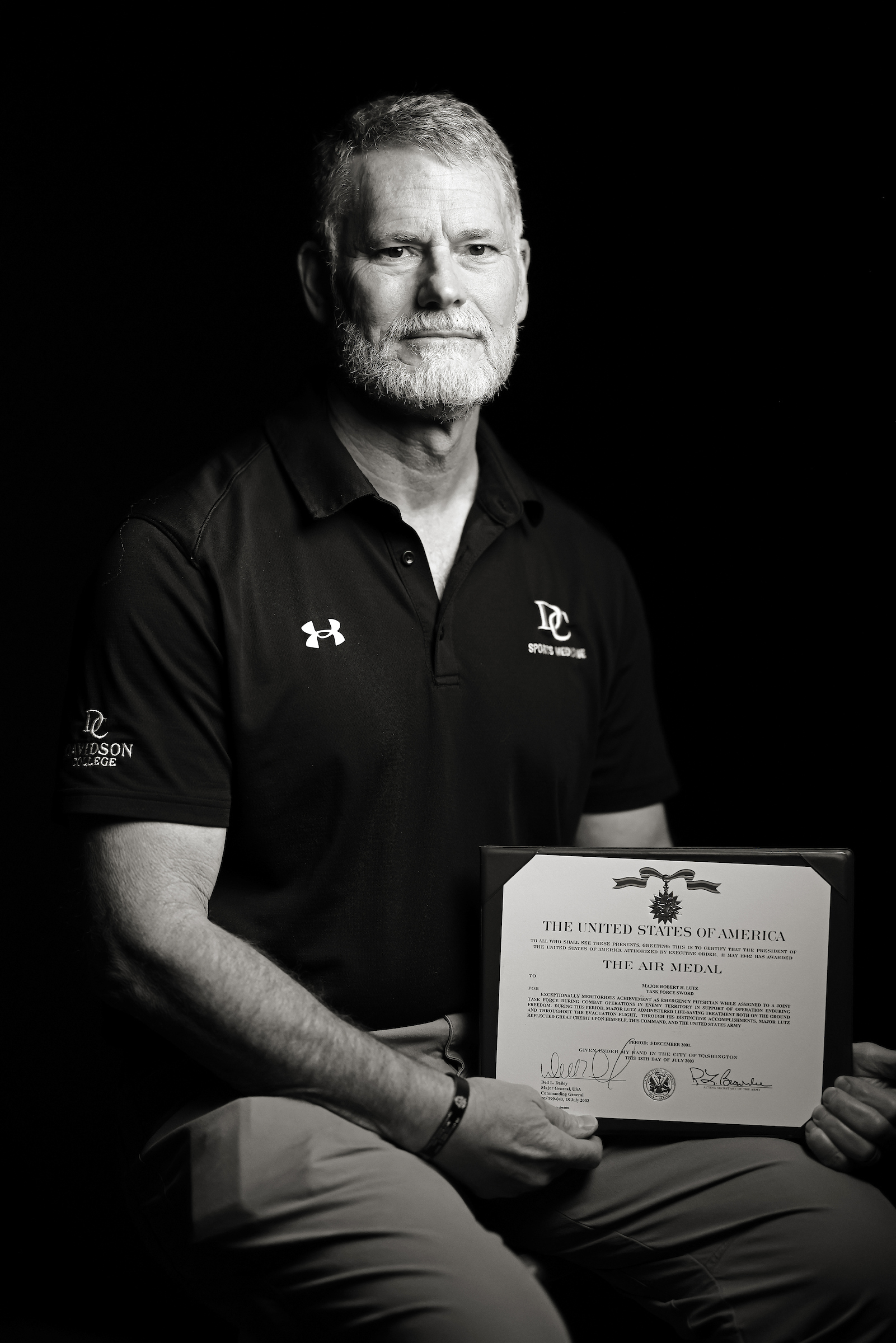
Robert H. Lutz ’87, M.D.
Operation Inherent Resolve
Iraq War, Afghan War
Army, Colonel
“After Sept. 11, our unit (the Joint Medical Augmentation Unit) started deploying.
I went to Afghanistan in November 2001.
It was my first time in combat.
Our mission was to provide forward medical support for special operation units, to bring forward resuscitative surgery to as close to the front as possible. Shortly after I got there, one of our special forces teams that was with (future Afghan president) Hamid Karzai and his guys were under attack by the Taliban and inadvertently got hit by a 500-pound bomb dropped by an American bomber.
It was a mass casualty situation. Our task force sent helicopters from Pakistan to pick up the guys, and me and my team took the guys back to Oman. We were the first aircraft to land in Afghanistan in the daylight and we got targeted by missiles on the way in. We took the seven most severely injured.
This was the first that I’m aware of in-flight surgery performed as part of a military operation. Our training had been so realistic that none of us really missed a beat. That instilled in me that you have to train like you fight.”
“I went to a month of officer’s training after I graduated and passed my boards.
We had to learn how to salute, who to salute, don’t call a ship a boat, and how to make your bed and keep your uniform clean.
They say you either laugh or cry so we laughed all the way through it. The first place I was stationed was Great Lakes Naval Hospital for a year and a half. Then they gave me a choice of Alaska or Guam for my next station. Guam was a tropical island and that’s what I chose. When you are in the military they will get you home [when you muster out], and home for me from Guam would have been to Hawaii and then Oregon – I chose to go the other way. I went on an embassy flight all the way around the world. I had already seen Japan, Hong Kong, the Philippines and the island of Yap, so I went to Thailand, Burma, Nepal, Calcutta, New Dehli, I stopped at Saudi Arabia, then I went to Europe and saw Spain, Austria, Switzerland and southern Germany. When I hit the United States I had to pay for my own ticket.”
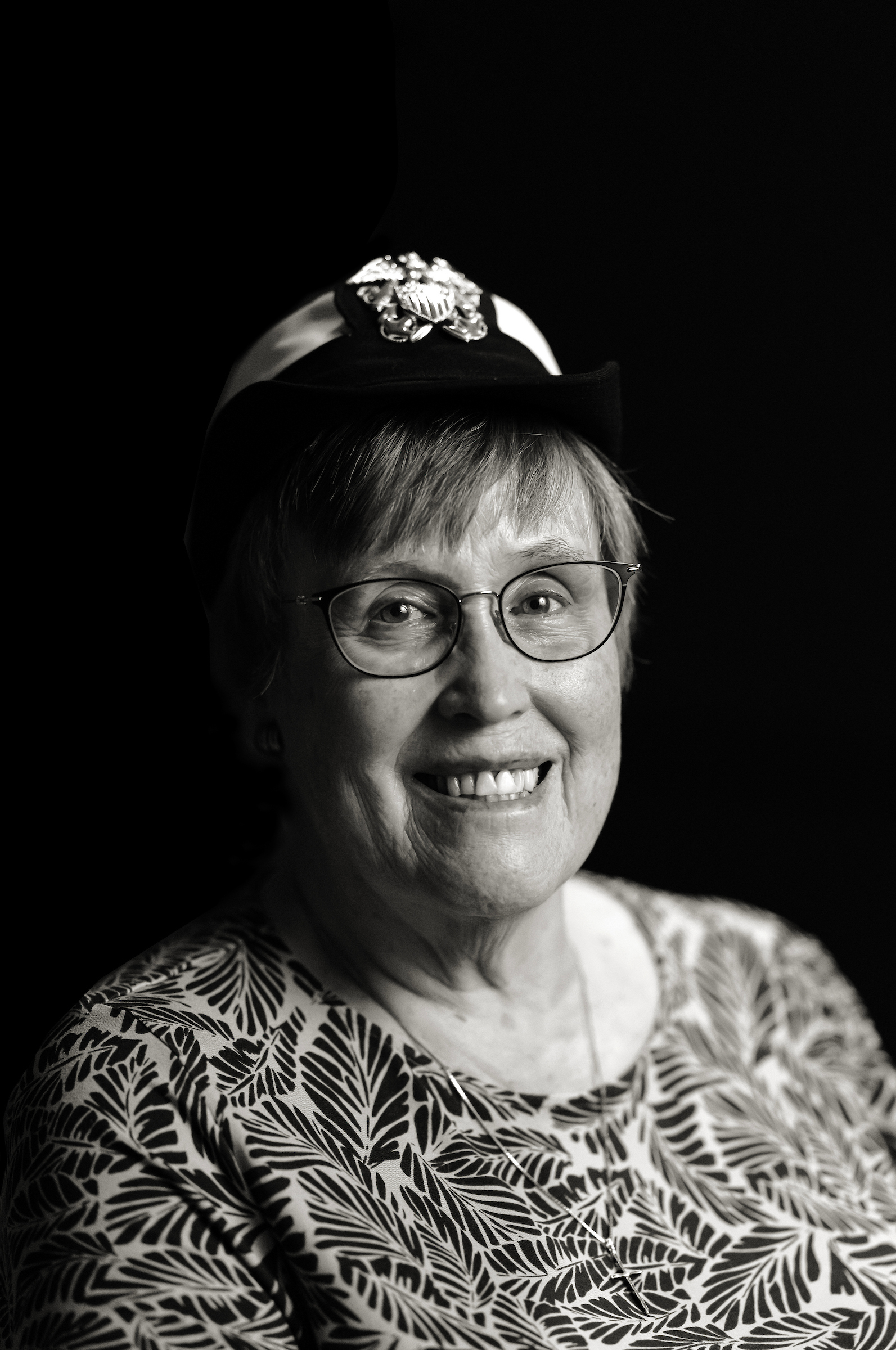
Judith Almon Heinemann
Vietnam War
Navy, Lieutenant Junior Grade (Nurse)
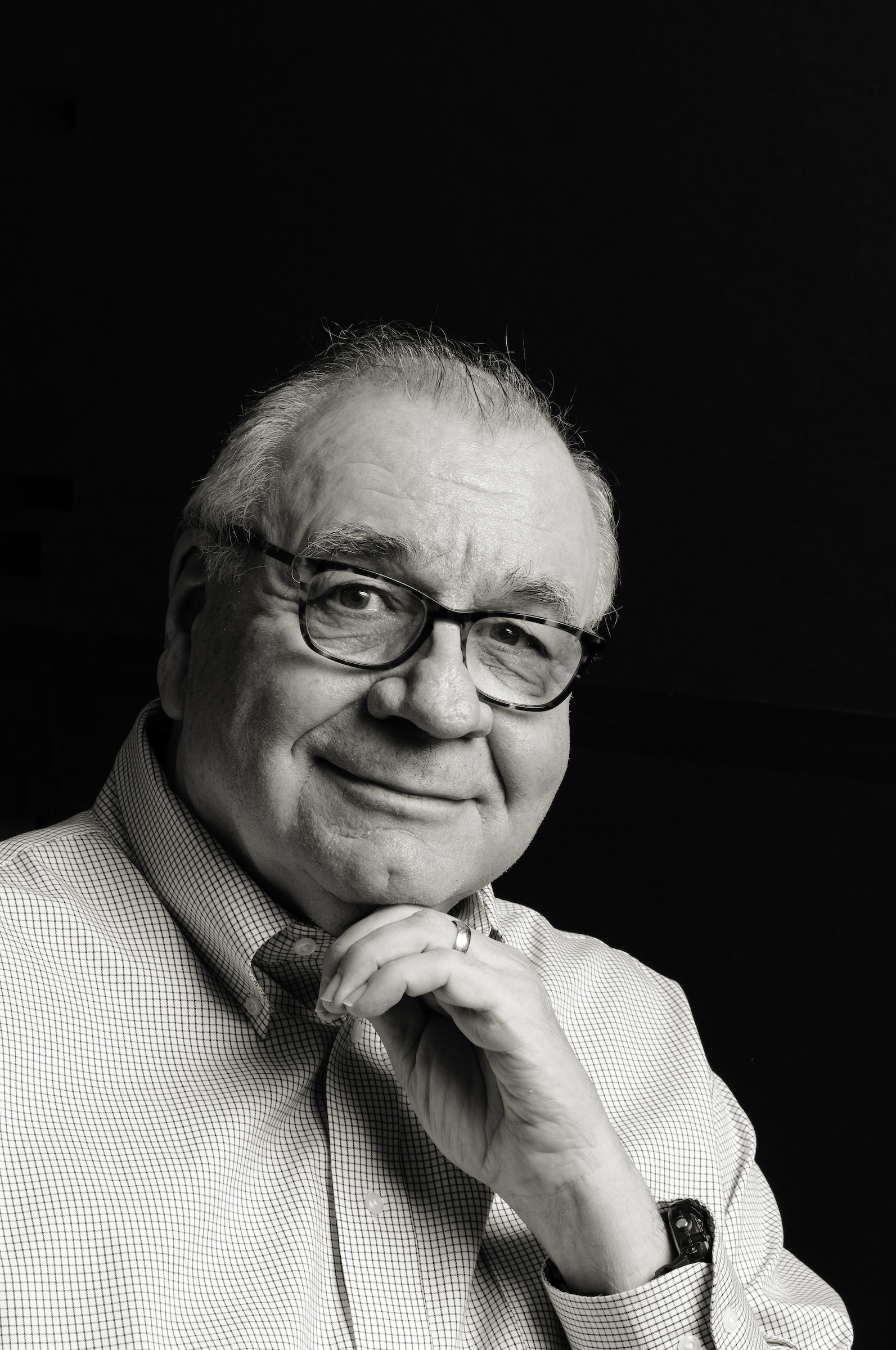
Stephen Paul Fairley
Vietnam War
Air Force, Sergeant (Air Traffic Control)
“They sent me to a jungle base in Thailand in 1967.
It was in the middle of nowhere – the most northern radar site in the war right on the Laos border.
We’d get them [the planes] in mid-air and vector them to where they want to be. During the height of the Tet Offensive we had 50-70 planes in the air at the same time. On the radar, we’d have probably 40 planes each, and there’d be a bunch of us just following where they were going to be.
You’d work an hour shift because with radar you can’t stare at a scope for too long – your eyes wander. You’d do that for a half hour then you’d go to a big plexiglass plotting board and I’d be talking to a guy through headphones telling him where the planes were coming in and he’d write coordinates, their speed, call sign on the board with a grease pencil. You would do that 8-10 hours every day.
When Tet hit, it grew to 15-16 hours a day. Once we started the bombing of Hanoi and Haiphong, especially the port, the chatter was constant. It was a constant din, a constant shouting, constant people in danger and we’re trying to get them out. I was seeing the war at 3,000 feet.”
“My first tour in Washington, D.C., as director of the Joint Staff was the hardest and most fulfilling job I’ve had – each day I’d get to work at 4 a.m. and leave at 8 p.m.
Incredible people on the Joint Staff, and everything that was happening in the world was right there at your fingertips. When I was selected for my fourth star I went to Germany to U.S. European Command as a deputy commander. During that period of time we evaluated the former Soviet Union countries wanting to join NATO … I was a little boy from a small town in South Georgia. My ambition was to play football and to see the world. I never played football, but I did see the world. I’ve represented our country in the military and relationship building in 118 countries. It’s something I never dreamed of, never deserved, but it’s been hugely rewarding. The young men and women who serve are absolutely phenomenal – they were in Vietnam, they were in the sands of Kuwait, and they are today. They’re dedicated, hard-working, they’re a lot smarter than we ever were and they’re doing a tremendous job protecting our nation.”
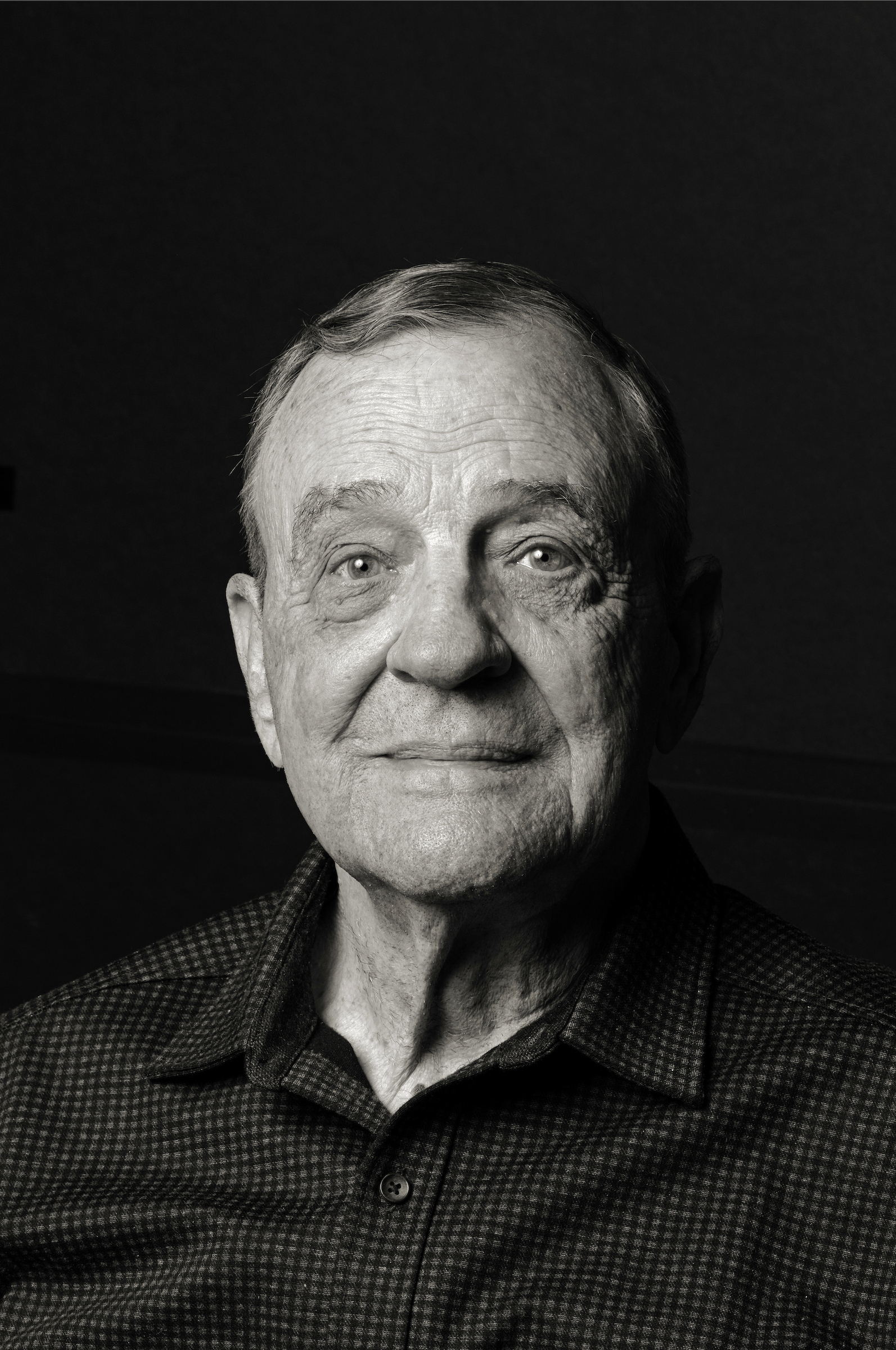
Carlton W. Fulford Jr.
Vietnam, Persian Gulf War, Kosovo
Marine Corps, General