‘She Is Not a Footnote’: National Women’s History Museum Spotlights Pioneers, Changemakers
March 19, 2026
- Author
- Mary Elizabeth DeAngelis
On Friday nights, Frédérique Campagne Irwin’s mother would take her and her younger sister grocery shopping, and then to dinner at McDonald’s.
Her mother often talked about major news events and explained their importance.
At six, Campagne Irwin knew those stories mattered, because her mother told them in a way she and her sister could understand. And the setting — a fast-food restaurant — had special sway with the girls. They didn’t get such fare at home, because their dad, a French chef, specialized in his homeland’s fine cuisine.
The conversations steered her early belief that stories mattered, that her voice deserved to be heard, and that she had the power to make a difference. Among friends and classmates, through history and current events, it bothered her that too many girls and women didn’t get respect or acknowledgment for their achievements. Her determination to succeed and help other women intensified at Davidson College, where she graduated in 1996 before launching a successful business career.
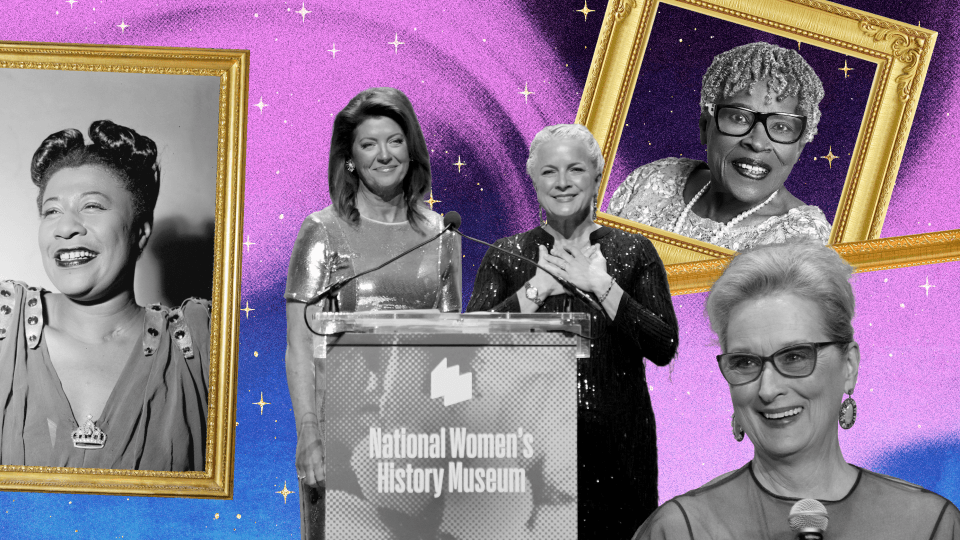
Now, as president and CEO of the National Women’s History Museum, she works to ensure those stories get told. The digital-first museum, established 30 years ago, offers its extensive archives and educational materials to teachers, students and the public.
It’s the only national privately funded museum dedicated to women’s history. The cause campaign, “She Is Not a Footnote,” comes with an added message aimed at girls and women: “And neither are you.”
From revolutionary war flag maker Betsy Ross to U.S. Supreme Court Justice Sandra Day O’Connor to tennis great Serena Williams, the museum offers hundreds of biographies of women who broke barriers in politics, education, healthcare, sports and science.
There’s much to celebrate, and a long way to go.
Now is especially the time, Campagne Irwin said, to reinforce the stories of perseverance and resilience that women have always shown throughout American history.
“We are at risk of going backwards. It’s very difficult for ambitious young women in this current environment,” Irwin said. “Supporting them feels more urgent than ever because of the realities all around us.”
Still Chipping at the Ceiling
Last year, the museum commissioned a survey of 1,100 girls and young women between the ages of 13 to 27. And while 67% of them said progress has been made, 89% believe that men hold most advantages in terms of economic, healthcare and educational access. (Though women today earn more college degrees, men still outearn them.)
Women make up more than half the United States population, yet they remain underrepresented in corporate boardrooms, holding 11% of Fortune 500 CEO positions, and political leadership, comprising 28% of the U.S. Congress. Just 14 women serve as governors of U.S. states.
“No matter what issue you care about — economic growth, innovation, healthcare, education or national security — if half the population is sidelined, we are setting ourselves up for failure,” the report said. “The challenges of today and tomorrow demand all of the talent, leadership and creativity we have. Yet women remain underrepresented in every arena that shapes our future.
“This isn't just a women's issue — it's a national issue."
The museum’s interactive website welcomes more than six million visitors a year and serves an estimated 40,000 students and educators both inside and outside of classrooms. Its supporters range from small dollar donors to large foundation gifts.
This week, the museum announced that Academy Award-winning actress Meryl Streep, a longtime supporter and advocate, donated a seven-figure gift to continue and expand its mission and digital-first vision.
“History is shaped not only by those who make it, but by those who ensure it is remembered,” Streep said in a statement. “The National Women’s History Museum has long been a catalyst for bringing forward the stories that deepen our understanding of who we are. I am proud to continue supporting this essential work so that future generations inherit a history that is both truthful and complete.”
The museum will establish the Meryl Streep Educator Award to honor “an exceptional educator each year who advances the teaching of women’s history and expands access to these vital narratives in classrooms and communities nationwide.”

Campagne Irwin and her husband, Jesse, have three children.

Sara Blakely, the founder of Spanx, and Campagne Irwin at an event
“Girls Can Do Anything”
Campagne Irwin grew up in the Washington, D.C., area. Her father, Bernard Campagne, owned La Bergerie, a well-known restaurant in Alexandria Virginia’s Old Town neighborhood. Her mother, Maryse, worked at the French Embassy.
“They had a traditional immigrant story,” she said, “that you worked hard and studied hard and succeeded.”
She attended a small, all-girls school before heading to Davidson with a deep interest in global studies. She majored in Russian Studies, an interdisciplinary major, and Robert C. Williams, then vice president of academic affairs and dean of faculty, served as her advisor. Already fluent in French, Spanish and English, she spent her junior year living abroad in Russia.
“I always loved business and grew up with the belief that girls could do anything. Davidson opened my mind,” she said. “I learned how to learn at Davidson.”
After college, she earned an MBA from the College of William & Mary graduate business school and set out on a career in management consulting and entrepreneurship.
She spent nearly two decades in management consulting, then founded and led Her Corner, a company that helped women grow their own businesses. She later served as managing director of impact strategy and measurement at the Sorenson Impact Institute at The University of Utah. In that role she partnered with top organizations in the social impact sector. She has also taught entrepreneurship, business management and organizational behavior courses at American University. She’s been leading the museum since 2023.
She and her husband, Jesse Irwin, a physician, have two children in college and one in middle school. As a mother, she’s seen that the messages kids hear in school, sports and social media perpetuate and amplify gender stereotypes. And that’s where the museum has the greatest shot for change.
“If we can get to girls — and boys — earlier and change what they think women and girls can do, that’s where we can have the biggest impact,” she said.
Campagne Irwin believes that offering access to honest, accurate accounts based on primary sources of women in history is crucial.
A few months ago, she woke up in the middle of the night and thought about a book she studied for her senior thesis: The Master and Margarita by Mikhail Bulgakov. He secretly wrote the satire between 1928 and 1940 to describe life during the Soviet Union’s repressive Stalinist regime. As he was dying, he asked his wife to publish it when it would be safe, “so they will know.” It remained hidden until it was published in 1967.
That message propels Campagne Irwin.
“Here we are almost 100 years later at a time when universities are dismantling women’s and gender studies and other programs because of political pressure,” she said. “We have states banning books, and teachers who feel pressure and anxiety over what they can and cannot teach.
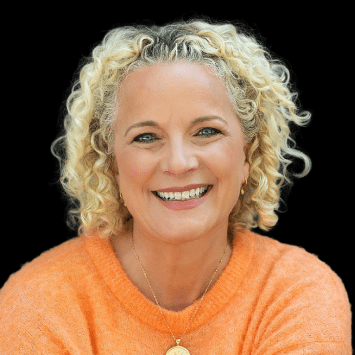
We absolutely must continue to collect and publish women’s history, because when women’s history disappears, representation declines. When representation declines, we lose voices at the table, with fewer of our best minds helping shape the future.
Class of 1996
Rose Stremlau, Charles A. Dana Professor of History and Gender & Sexuality Studies at Davidson, who serves as a member of the museum's Scholars Advisory Council, has high praise for Campagne Irwin’s leadership.
“As other cultural and educational institutions have retreated in response to shifting political power, the National Women’s History Museum has not,” Stremlau said. “Her leadership has been essential to this continued commitment to be visible, vocal and visionary in advocating for women and girls, our stories, and our limitless potential.”