Experiencing Deaf Language and Culture in Far Away Places
April 16, 2026
- Author
- Mary Elizabeth DeAngelis
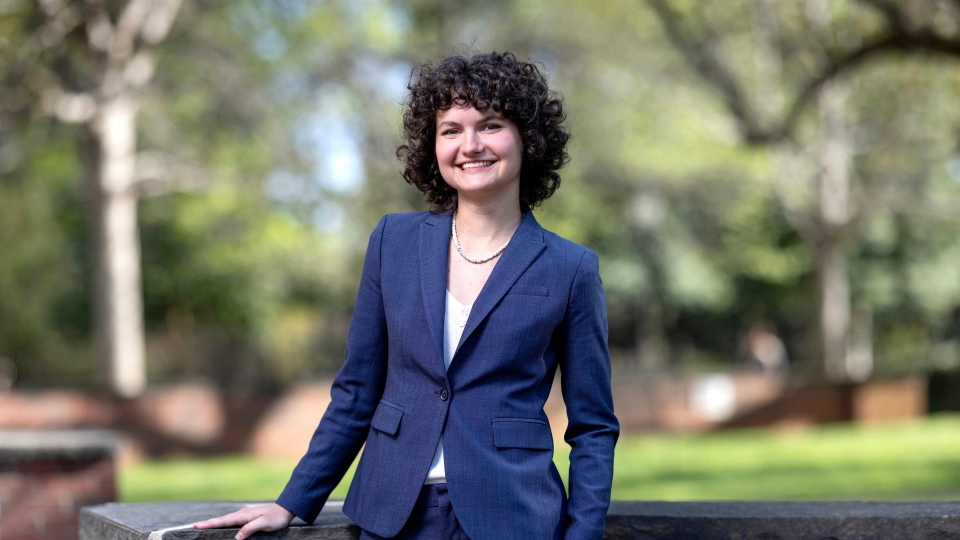
Brooke Lackey ’26 grew up in a tight-knit American Deaf community, where gatherings were frequent and fun. She and her family felt most at home there as everyone freely communicated in American Sign Language.
Her parents could laugh with friends who they understood, and understood them, while she and her brother played happily with their kids.
Her life as a Child of Deaf Adults (CODA) has inspired her plans for her future. Those plans just got a big boost from the Watson Foundation, which selected her as a member of its 58th class of Thomas J. Watson Fellows.
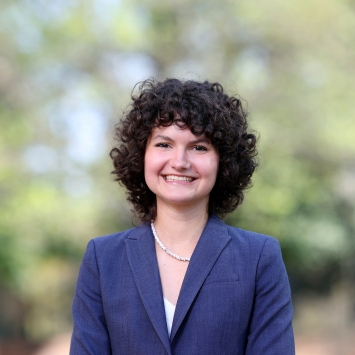
Lackey ’26, from Winston-Salem, North Carolina, is a Bonner Scholar and psychology and educational studies double major at Davidson College. She plans to spend the next year researching and experiencing Deaf community and culture in five different countries.
“The history, culture and norms of a Deaf community are all directly impacted by the larger dominant culture that surrounds it,” she said. “How might societal perceptions and values towards a Deaf community impact that community’s strength and care for one another? Does infrastructure, such as Deaf education systems and sign language legislation, indicate care provided by a country?”
By immersing herself in global Deaf communities, she hopes to learn how people navigate ableism, establish belonging and engage in care networks—all areas she cares about deeply.
“My family really shaped me,” she said. “My childhood was very sweet. I had a great family support system, as well as friends who I could always turn to, and still can.”
At monthly Deaf club gatherings, her family found joy in being around others who understood American Sign Language (ASL). There was no need for interpreters, and everyone felt included, she said.
In different settings, such as some school events, grocery stores and even among family members who didn’t know ASL, her parents, Kathryn and Byron, and their Deaf friends often felt the frustration of not being able to communicate easily.
CODAs, who often serve as interpreters, can feel that sense of frustration and exclusion on their parents’ behalf, she said. When she spent a week each summer at a Deaf camp in North Carolina, she reveled in being part of a community that fully embraced her family.
“It was such a sacred space,” she said. “I remember sitting in the back seat of the car when we’d pull up to camp, where almost everyone was deaf or knew sign language, and someone would show us where to park. I always thought how nice it was for my parents to be able to understand and communicate so freely.
“This is how I wish communicating could always be for my parents and other Deaf people.”
Signing for Gelato
In the summer of 2024, Lackey received a Dean Rusk travel grant to study Italian Sign Language and Italian Deaf culture and history at the Siena Art Institute’s School of Deaf Studies in Italy’s Tuscany region.
She immersed herself in the language and culture, finding many similarities between the Deaf community there, and the one she was raised in.
They’re both such small, close-knit worlds. It was such a life-changing event. I had never experienced another sign language. I had to learn different ways of moving my hands and face to communicate.
In Italy, as she mastered the signs for everyday language—cappuccino, pasta and gelato are among her favorites—she grew determined to learn more about Deaf community and culture in other places.
As a Watson Fellow, she plans to explore how ableism is expressed and persists in different societies, how it affects Deaf communities, and how some create more caring environments. Her travels will take her to Scotland, France, Ghana, Mongolia and New Zealand.
After her Watson year, she intends to pursue a post graduate degree and is considering a career in school psychology, mental health counseling or sign language interpreting.
Molly Flaherty, assistant professor of psychology, said Lackey shows extraordinary independence and initiative. Lackey worked in Flaherty’s lab last summer and during the current school year on a project examining how American Sign Language is taught at Davidson and other institutions.
“I’m her faculty mentor, but this project came entirely from Brooke,” Flaherty said. “She independently conceived it, her passion brought it into being, and her initiative and diligence are shaping it into something of tremendous richness.”
Flaherty said Lackey puts the people she interviews at ease, making them comfortable sharing their experiences.
“She unfailingly treats others with respect and integrity,” Flaherty said. “Brooke recognizes and approaches problems with skill and resourcefulness.”