Conserving Nature, Predicting Changing Water Patterns
April 16, 2026
- Author
- Mary Elizabeth DeAngelis
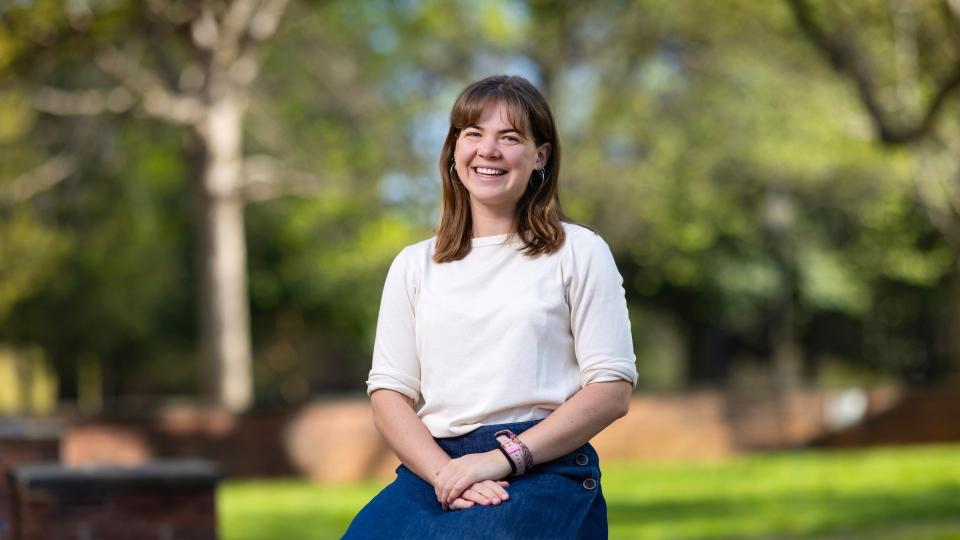
Her first name means snow, which Neve Rauscher’s parents chose after her birth during a winter storm.
Rauscher reveled in the white covered slopes of her Utah home as a child but learned early how a changing climate’s “snow droughts” threatened water supplies and turned dry landscapes into wildfire breeding grounds.
At Davidson College, Rauscher ’26 has spent her four years studying and researching the effects of water patterns in realms ranging from western deserts to the North Carolina mountains devastated in 2024 by Hurricane Helene.
She’ll learn about different systems around the world as a 2026 Watson Fellow and plans to explore measures countries take to conserve their natural resources, traveling from bucolic mountains to deserts struggling to provide residents with water.
In her year abroad, she’ll study how rural communities adapt to El Nino patterns on an alpine lake in Peru; work with a sled dog trainer in Canada to see how melting sea ice affects transportation routes, look into the geopolitics of water rights in Turkey and Jordan, and learn about monsoons’ toll on farming in Nepal and India. (She may alter that itinerary due to world conflicts.)
She’ll witness firsthand how changing climate systems, increased drought, hydro damming projects and melting glaciers have forced people to adapt or in some cases relocate.
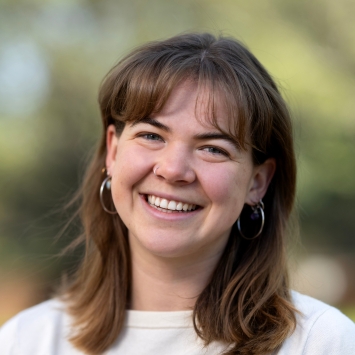
How do perceptions of home change when sustaining water systems face an extreme shift? In my Watson year, I will live in new and challenging environments, gaining the perspectives of those who are resilient in the face of an unknown future for their communities.
Family Tradition, Livelihood Threatened
Mountains feature prominently in Rauscher’s life story.
Her grandfather was a cheesemaker in the Swiss Alps. In family photos, he stands against a backdrop of jagged mountains, surrounded by snow. Her dad, Felix, is a ski instructor and her mom, Sari, now a college counselor, was once a ski coach.
Winters with little snow cause anxiety in the Salt Lake City valley where Rauscher’s family lives, and throughout the western mountains. People depend on snow not only for their livelihood, but on melting glaciers for drinking water and prevention of drought-related wildfires.
Those concerns cross oceans.
Rauscher came to Davidson as a Belk Scholar. In the summer after her sophomore year, she received a Dean Rusk grant to travel to her dad’s birthplace. She worked on a farm, herding cows, milking goats and making Swiss cheese. She saw how climate warming threatened that way of life—the glaciers that once provided water for fountains and power were shrinking or gone. Rain came less frequently, but often more intensely, which could damage fields. Cows and calves struggled in hotter weather.
The farmer she worked with with told her such worries had him hoping his children found careers outside of farming.
“I didn’t expect to come to Alp Morgeten and realize that the tradition that had been in my father’s family for generations was rapidly changing,” Rauscher said. “I grew up hearing all sorts of stories about life in the Alps—through Swiss kids' books, movies and family history. Working with cows in the Alps [or mountains] and in the dairy was always a source of pride for both the family I stayed with and my own family.”
She also saw how farmers have worked to adapt to changing conditions.
“Though some things look different because of heat and water shortages, they’re still bringing cows up to graze and making cheese,” she said. “So much of my Watson year is focused on learning about the ways people are resilient in dealing with those challenges.”
An Outdoors ’Cat
Rauscher has always revered and worked to conserve natural resources.
At Davidson, she researched flood patterns in the Blue Ridge Mountain foothills. She led Davidson Outdoors trips that spanned from the Western North Carolina mountains to the Florida Everglades. She taught young kids afterschool ecology lessons at the Ada Jenkins Center.
After her Watson year she plans to attend graduate school for a degree in geography and environmental science. She wants to pursue climate modeling regionally and globally and hopes to make a career in hazard mapping and predicting changes in climate systems.
She’s earned respect for her research, leadership and sense of fun and adventure.
“From an infamous Outdoor Odyssey experience where her trip leaders both got COVID to rock climbing trainings, whitewater trainings, mountain bike trip leader, all the way to being co-president this past year, Neve has done it all,” Davidson Outdoors Director Katie Eggleston said. “She even invented new adventures, like last fall when she created the Lake Norman Pirate Treasure Hunt with her whole crew paddling around in one giant canoe.”
Eggleston said if another trip leader had to cancel, Rauscher could be counted on to step in.
“She’s not only looking for every experience, she’s ready for the unplanned ones too,” Eggleston said. “She can turn sitting under a tarp in a thunderstorm into one of the most fun memories from a trip. She learns new skills faster than any student I’ve worked with. I can only imagine how much Neve is going to learn from a whole year of adventures with the Watson Fellowship."