Fighting for Disability Justice: Rui Rui Bleifuss ’26 Awarded Smith Scholarship
June 2, 2026
- Author
- Mary Elizabeth DeAngelis
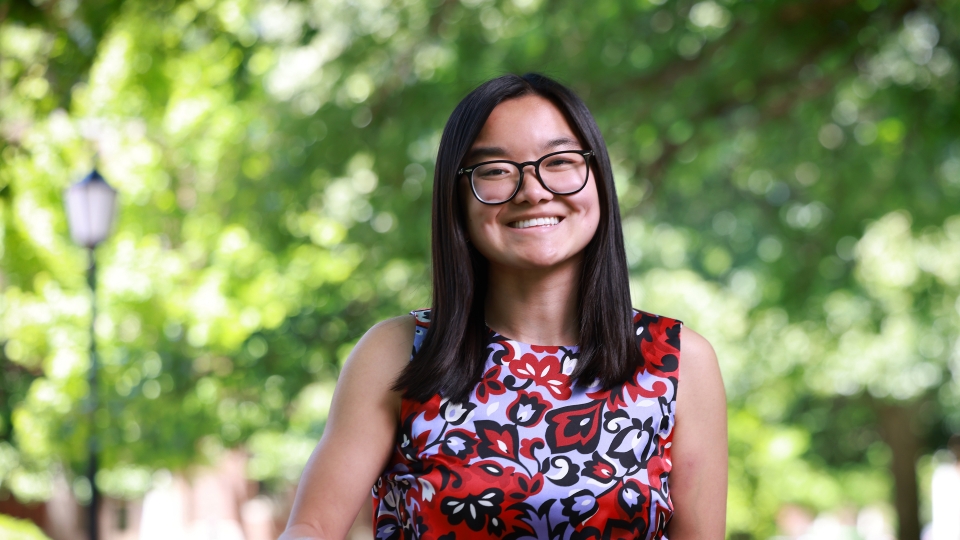
Rui Rui Bleifuss ’26 wishes she didn’t have to fight for what most people take for granted. She learned early though that a world designed for the able-bodied holds many potential physical and emotional landmines for those with disabilities.
A building without an elevator. A crosswalk with no cut in the curb. A steep hill, or a transit bus with a broken ramp. A class trip centered on jumping.
She began speaking up for herself in elementary school, started a disability alliance club in high school and led one at Davidson College, where she created her own major in disability studies and educated others about how to create a more inclusive, accessible society.
She’s not just fighting for herself, but for all those who have a disability, whether it’s being born with physical or cognitive impairment, or thrust into it later through illness, injury or aging.
Her leadership, strong academic record, character and community service are among the many reasons that Bleifuss has been awarded the W. Thomas Smith Scholarship. Its support will send her to University College London to pursue a master’s degree in Humanitarian Policy and Practice.
At Davidson, Bleifuss earned the respect of professors, staff and peers, impressing them with her intellect, solidly backed scholarly research, advocacy, kindness, and humor.
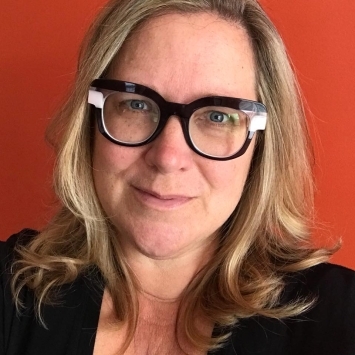
Rui Rui is forthright and direct, but also an excellent listener and mature thinker. She’s able to hear and respond generously to those she disagrees with, while explaining her stance clearly and respectfully.
English Professor
Speaking Out Young
Bleifuss grew up in Minneapolis, Minnesota. Her parents are retired public school educators. Her mom, Sherry Kempf, taught high school English before moving into a position with the district’s equity department. Her dad, Ethan Bleifuss, taught high school science.
As a baby, Rui Rui, (pronounced Ray-Ray), showed signs of muscle weakness and was late learning to walk. That led to years of different tests and doctors until just before her fifth birthday, when she was diagnosed with Charcot-Marie-Tooth (CMT). It’s a genetic disability that causes nerve damage and affects strength and muscle coordination.
As a kid, her disability was often a source of questions and stares, and at times, exclusion. In one case, her elementary school planned a trip to a trampoline park.
“Since I couldn’t jump, the administrator leading the trip said I could hang out in the arcade, but no other students could join me because they were only allowed to be on the trampolines,” she said. “The admin said I could hang out with the teachers because they were the only ones allowed in the arcade.”
Her mom didn’t accept that plan and told her she shouldn’t either.
“After many conversations, my friends were allowed to join me,” Bleifuss said. “That is the environment I grew up in. My mom taught me to always stand up for myself and make sure I was included.
“My mom’s a fighter. When things like that happened, she’d say, ‘I’m sorry you have to deal with this, but we’re going to fight this together.’”
She found solidarity at the Muscular Dystrophy Association’s summer camp, where she spent a week each year. She participated in adapted versions of waterskiing and wheelchair basketball, and spent hours talking with other kids who understood, including two lifelong best friends she made there.
“My everyday life was learning how to fit into the norms,” she said. “But camp normalized my disability. It brought so much joy to my life when I felt like I was fitting into the mainstream. It was the best week of the year growing up. It gave me such a sense of self-assurance and has always been a large part of who I am.”
She credits her parents for encouraging those opportunities, as well as stressing the joy and value of education.
“Having parents who were teachers gave me a real passion for learning,” she said. “It also gave me the confidence to talk to my teachers—I realized they were just people— I wasn’t afraid to approach them.”
An Inclusive Community
Bleifuss applied to 19 schools before choosing Davidson. She liked its academic offerings, small size, and focus on a broad liberal arts education. She visited after being offered the Belk Scholarship during her senior year in high school. She was pleased to find a mostly flat campus, an easily accessible downtown, and the college’s commitment to accommodating her needs.
She met with Fox during that visit, and both left impressed.
“We were scheduled to meet for 30 minutes and ended up talking for an hour,” Bleifuss said. “We talked about disability aesthetics, disability justice and activism—and some areas of study I’d never heard of.”
Bleifuss also met Sarah Todd Hammer ’24, who told her about the Davidson Disability Alliance (DDA) and the supportive community at the college.
“Very few colleges I connected with had such a robust movement,” Bleifuss said. “It was amazing. The cherry on top was that I found out about another student on campus with a service dog, and her dad is a local veterinarian. All my needs were met.”
Bleifuss and her service dog, Yeti, fell quickly into the rhythm of campus life. They became a familiar friendly and popular duo as they crossed campus, she on her electric scooter with him at her side.
Her four busy years at Davidson included serving as president of the DDA, as a Chidsey Leadership Fellow, a Lead Senior Admission Fellow and co-chair of Students for Inclusive Academics at Davidson (SIAD).
Bleifuss initially thought she’d go into medicine or law focused on disability. At Davidson, her courses included a wide range of policy, art, literature, historical and Chinese studies, which expanded her ideas for potential careers. She’s now on a path to foster change through policy, which she’s excited to learn more about as she pursues her master’s degree.
From Sourdough Starter to Pâtisserie Protégé
She had a fun two-week immersive adventure in London last summer, using travel grants designated through the Chidsey and Belk programs.
“London has a very different approach to disabilities than cities in the United States,” she said. “They have different access. I’d see a construction site and be so worried about how I was going to navigate it, but they’d already built in a cut to the curb to make sure wheelchairs could get through it.”
She also attended multiple art exhibitions centered on disability, including a collection at the Victoria and Albert Museum.
“There was such an amazing and vibrant culture,” she said. “It was a transformative experience. I remember telling my parents, ‘I could see myself here in the future.’’’
She enrolled in an intense week-long baking class at Le Cordon Bleu London. She’d become one of the many sourdough bread bakers during the COVID-19 pandemic and wanted to explore the wider craft.


At Le Cordon Bleu, she learned how to make pizza dough, brioche, ciabatta, macaroons, and croissants. She laughs recalling how hard she worked beating egg whites for the macaroons, only to have her French chef instructor look over her shoulder and say, “Non!”
“He’d then show me the right way, and my arms would be so tired by the end of it,” she said. “I had so many boxes of macaroons, I got sick of them and ended up giving most away. I also learned something fun; Chef told us we could add sourdough to any recipe to enhance the flavor.”
Back at Davidson, her fresh-baked sourdough crackers, paired with hunks of cheese on a charcuterie board, became a coveted treat for her and her friends.
Amplifying Voices of Disability
The Centers for Disease Control (CDC) reports that one in four Americans live with a disability ranging from impaired cognition to blindness to deafness to immobility.
Adults with disabilities are more likely to have other conditions such as heart disease and diabetes and to live in poverty and die younger than non-disabled counterparts. Recent federal funding cuts in programs such as Medicaid, which helps provide health aides, equipment and therapy, leave them even more vulnerable.
Advocates say that too often, those with disabilities don’t have a voice at the tables of power and policy.
Bleifuss is spending this summer interning with Amplify MN: A Disabilities Justice Collective, in her home state. She started interning there after sophomore year and has focused on a continuing oral history project in partnership with the Minnesota Historical Society.
She’s interviewed residents about their experiences living with disability: Their memories span from life long before the American Disabilities Act became law in 1990 to the present. The interviews will go into the Historical Society’s archives.
“There are very few oral history projects around disability, we want to capture their stories,” she said. “There’s a need to help those at the margins in the disability community connect with other marginalized communities and fight for justice.”
Kapriskie Seide, assistant professor of sociology at Davidson, says Bleifuss has become a leader in such discussions.
“Rui Rui has developed a clear, analytic voice, particularly in how she approaches questions of disability, inequality and global systems,” Seide said. “She consistently presses conversations further, asking what is at stake, and who remains excluded from decision-making.
“She identifies where institutional practices fall short, builds relationships across those spaces, and contributes to efforts that advance accessibility and inclusion. Her leadership is steady and relational, grounded in a clear sense of service to others.”
Bleifuss plans to keep fighting.
“I would love disabled people leading the fight for justice,” she said. “I'd hope our ingenuity and disabled knowledge is seen as crucial in decision making, rather than an afterthought. Instead of seeing disability as a tragedy, our crip joy would be recognized and celebrated.”
Hobby of Choice
“I love collecting rocks. Every rock is so different, they each tell such a story. I’m picky, I choose them based on what patterns and colors catch my eye. Airport security hates to see me coming with all those rocks."
Rui Rui Bleifuss ’26
The Smith Scholarship competition is administered through the Office of Fellowships. For more information about the Office of Fellowships or applying for the Smith Scholarship, visit davidson.edu/fellowships.