Scholarly and Creative Writing Awards
Davidson College Writing Competitions
The Department of English urges all students and all years to submit your best work to our annual writing competitions: the R. Windley Hall, Charles Lloyd, and Vereen Bell competitions, and the newest named award, the Gibson Prize for Scholarly Writing.
Each winning entry is selected by a distinguished external judge.
Fiction
Awarded to the best work of fiction by a student. Submit up to eight pages (if excerpted, indicate so) of any story written during your time in attendance at Davidson. More than one story may be submitted, but the total page count may not exceed eight. If excerpted, say so.
Creative Nonfiction
Awarded to the best work of creative nonfiction by a student in any discipline written during your time in attendance at Davidson. The total page count may not exceed eight. If excerpted, say so.
Poetry
Awarded to the best poetry by a student. Submit up to eight poems written during your time in attendance at Davidson. The total page count may not exceed eight.
Scholarship
Awarded to the best scholarly essay written by a student in any discipline written during your time in attendance at Davidson. The total page count may not exceed eight. If excerpted, say so.
- Submit up to eight pages in a category.
- Work may have been written for any class, or on your own during your time in attendance at Davidson.
- All work must be double-spaced.
- You may enter 2 contests: one in creative writing (either fiction, creative nonfiction or poetry), and another in scholarly writing.
- All students submitting to these competitions must be available to attend the awards on Tuesday, March 31 at 5 p.m. For questions about this requirement, contact Mark Riley at mariley@davidson.edu.
The deadline for submissions is Thursday, March 19 by 5 p.m.
Meet the Judges
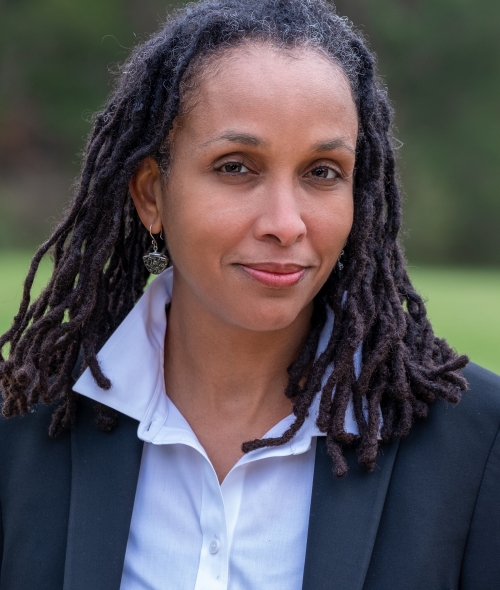
Crystal Simone Smith
Poetry Submissions Judge
Crystal Simone Smith is an award-winning poet and educator. She is the author of Runagate: Songs of the Freedom Bound (Duke University Press, 2025) winner of the Roanoke-Chowan Poetry Award and Dark Testament (Henry Holt, 2023). In 2022, her collection of haiku, Ebbing Shore, won The Haiku Foundation Touchstone Distinguished Book Award. Smith is the recipient of a Duke Humanities Unbounded Fellowship. Her work has appeared in numerous journals including POETRY Magazine, Harper's Magazine, Rattle, Frogpond, and Modern Haiku. She teaches in the Thompson Writing Program at Duke University.

Jeannie Vanasco
Creative Nonfiction Submissions Judge
Jeannie Vanasco is the author of A Silent Treatment, which was named a best book of 2025 by NPR, Electric Literature, and elsewhere. Her other memoirs include Things We Didn’t Talk About When I Was a Girl—a New York Times Editors' Choice and a best book of 2019 by TIME, Esquire, Kirkus, among others—and The Glass Eye, which Poets & Writers called one of the five best literary nonfiction debuts of 2017. She lives in Baltimore and is an associate professor of English at Towson University. Her fourth book is under contract with Tin House, publisher of her other memoirs.

Kelcey Ervick
Fiction Submissions Judge
Kelcey Ervick is a writer and artist creating visual narratives in a variety of media. She is the author of four award-winning books, including The Keeper, a graphic memoir about growing up in girls’ sports in the early years of Title IX, which won a 2023 Ohioana Book Award and was featured in the New York Times Book Review's Holiday Gift Guide. Kelcey coedited The Field Guide to Graphic Literature, and her work has appeared in The Washington Post, The Believer, Lit Hub, and elsewhere. She has received grants from the Indiana Arts Commission, the Sustainable Arts Foundation, and IU’s New Frontiers in Arts and Humanities. She is a professor of English and creative writing at Indiana University South Bend.
Kelcey Ervick will give a reading at 7:00 p.m. on March 31 in the Alvarez-Smith 900 Room of the Knobloch Campus Center.
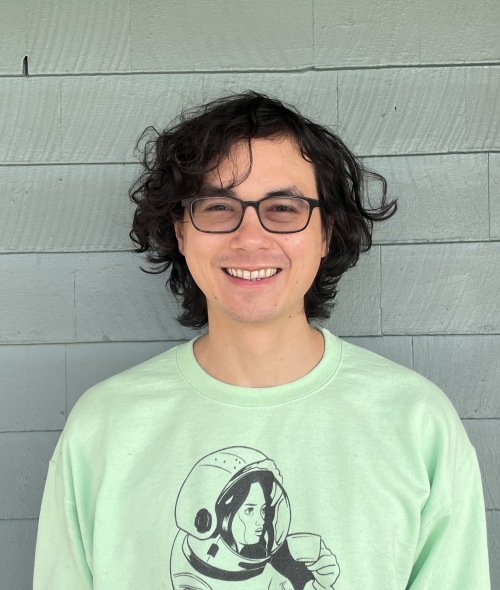
Christopher Spaide
Scholarly Submissions Judge
Christopher Spaide is an Assistant Professor of English at the University of Southern Mississippi, where he teaches twentieth- and twenty-first-century poetry. His poems, essays, and reviews have appeared in The Best American Poetry, Boston Review, Lana Turner, The Nation, The New Yorker, Ploughshares, Poetry, and The Yale Review. He has received fellowships from the Fox Center for Humanistic Inquiry at Emory University, the Harvard Society of Fellows, the James Merrill House, and the Keasbey Foundation; for his academic writing and criticism, he has received prizes from Post45 and The Sewanee Review. Currently, he serves as the Secretary for The Wallace Stevens Society. He is the literary executor for Helen Vendler.