DCI Training & Courses
The Deliberative Citizenship Initiative (DCI) offers a comprehensive range of training and educational programs designed to foster honest, respectful, and productive discourse on complex social and political issues.
Deliberation Facilitator Training Workshop
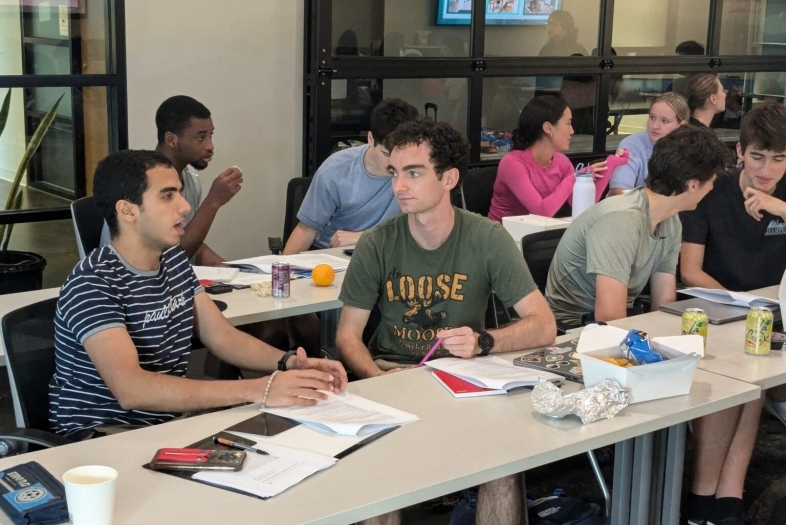
Every year the DCI hosts a two-day, eight-hour Deliberation Facilitator Training Workshop. It is required for the DCI Fellows and DeeP Collaborative faculty members and is open to interested students, staff, faculty members, alums, and community members.
Spread across two weekends, the workshop equips participants with the skills and knowledge to foster more honest, respectful, and productive discourse in their communities on difficult political and social issues. It involves numerous interactive activities and mock deliberations that enable participants to practice facilitating these kinds of conversations. Everyone who completes the training is certified to facilitate the DCI’s deliberative discussions.
Deliberative Pedagogy (DeeP) Program
The DCI hosts a cohort of faculty from Davidson and other institutions of higher education that spends an academic year developing courses that include a significant deliberation component. This Deliberative Pedagogy (DeeP) Collaborative first meet during a day-long orientation workshop on the Davidson campus in August and then continue to meet virtually over the course of the year to discuss selections from the relevant literature and share their progress as they develop and implement their deliberation-involved courses.
All Collaborative members submit Deliberative Course Plans, syllabi, and blog posts describing their experience creating and teaching their courses that are published on the DCI Blog. To complement the work of the Collaborative, the DCI also hosts one-time deliberative pedagogy panels and workshops that are open to all faculty.
Research
The DCI is committed to supporting research on deliberation. It analyzes the approaches of similar programs and assesses the effects of its own activities by tracking, analyzing and reporting on its inputs, processes, outputs, and outcomes. By conducting focus groups, interviews, and surveys before and after its programs and examining recordings of the deliberations it hosts, the DCI seeks to identify what is working well and what can be improved upon in the future.
The DCI publishes an Annual Report that summarizes this information and is developing other research materials that examine the effects of its programming in more detail. The DCI also publishes Deliberation Guides, Pathways Guides, and other resources that are used by its Forum and D Team participants.